Key takeaways
- Receive the source register, planning decisions and check configuration with the draft.
- Turn open assumptions into owned review items with a documented release effect.
- Keep approval attached to the exact revision and distinguish file verification from receiving-system acceptance.
27 seconds · From a Build Flows walkthrough
Review the evidence behind an AI schedule
Health checks, activity evidence and version history make an AI-generated draft reviewable. A score is an input to review, not acceptance by itself.
Read the clip transcript
And so, when this does do a review, it there is our test that it runs. It does a health score. And if there's any failures, you can, you know, ask the builder to fix this with additional context here. And then, ultimately, it has all of the activity evidence. So, how it arrived at that specific conclusion for when it generated this. And so, it will continually run and process and have an entire historical record of the versions for this as you are, you know, exporting this.
Captions adapted from the source video; proper names may reflect automatic transcription. Original segment: 10:12–10:39. Watch at the source.
14 seconds · From a Build Flows walkthrough
Keep the scheduler in the decision
Inspect driving and critical paths, then have the scheduler validate the schedule before it is handed to the client.
Read the clip transcript
You can check driving paths, critical paths. You can do associations. And so, all of this is able to be referenced and be able to be validated by the scheduler and be able to then ultimately be provided to the client.
Captions adapted from the source video; proper names may reflect automatic transcription. Original segment: 11:42–11:56. Watch at the source.
An AI-generated construction schedule should arrive as a reviewable package: the schedule, the inputs that shaped it, the open assumptions, the checks performed and the exact revision being offered for approval. A polished Gantt chart by itself cannot tell the reviewer whether the sequence is buildable.
The useful handover question is: can a scheduler explain, challenge and reproduce the important decisions in this draft? This checklist is for the project-controls lead receiving an AI-assisted draft. It complements technical XER verification and schedule health checks; it does not replace project-specific planning judgment or agreed submission requirements.
See how the draft is assembled
The Connect walkthrough at 6:37 shows the questions that source documents cannot settle on their own. At 10:17, the walkthrough moves through health checks, activity evidence, version history and XER export. Those are useful parts of a handover because they give the reviewer something to inspect beyond dates on a chart.
Connect is a custom application built for Syncify. The video is an October 2026 demonstration of that implementation, not a statement that every AI scheduling product provides the same controls. Explore the published Connect work for the build context.
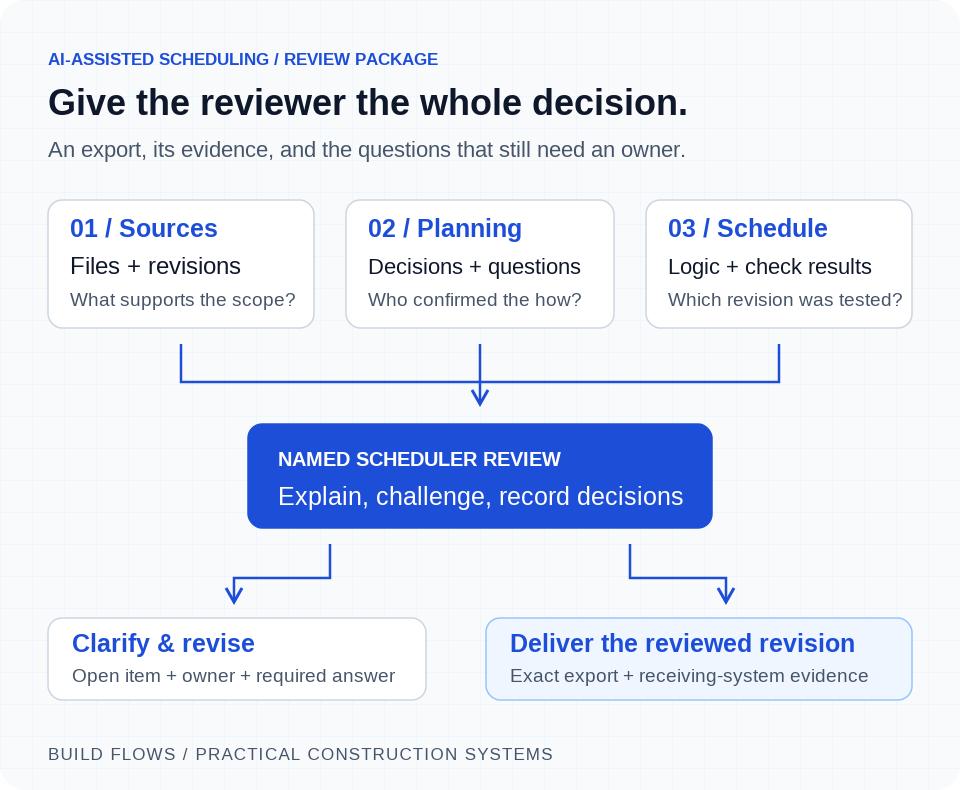
Ask for six things in the handover package
| Package item | What the reviewer needs | A reason to return the draft |
|---|---|---|
| Source register | Named files, revisions, issue dates and the source snapshot used to create the draft | The team cannot tell which drawing revision supplied the scope |
| Planning decisions | Confirmed means and methods, access restrictions, phasing and unanswered questions | A consequential sequence is presented as fact without an owner or source |
| Schedule identity | Project, draft revision, purpose, data date where applicable, calendars and calculation settings | Reviewers are comparing different revisions or different schedule bases |
| Logic and health evidence | Check results, exceptions, milestone coverage and the paths driving important dates | The handover offers only one aggregate health score |
| Change summary | Added, removed and changed activities or relationships since the reviewed predecessor | A new file replaces the draft without explaining what changed |
| Delivery evidence | Exact approved export, receiving application/version and an import/recalculation comparison where required | The file being delivered is not the revision that was reviewed |
These are proposed acceptance artifacts. Tailor them to the project and the receiving system; the table is not a universal contract or a software certification.
Separate facts, decisions and assumptions
A useful review register does not put every statement into one “AI confidence” column. Use three categories:
- Source-backed fact: a named document and revision support it. The reviewer can open the relevant passage.
- Confirmed planning decision: a named person has agreed how the work will be executed. Record who decided and when.
- Open assumption: the draft needs an answer. Assign an owner, the affected activities and the decision needed before release.
For example, a drawing can show a concrete slab. It may not settle the pour sequence, access window or crew strategy. Those choices need project context. A citation to the drawing should not make an inferred sequence look like an approved means-and-methods decision.
The means-and-methods engineering guide explains how we keep these decisions reviewable inside Connect. Here, the practical requirement is simpler: a reviewer must be able to distinguish what came from the source, what a person confirmed and what still needs an answer.
Review the logic behind a date
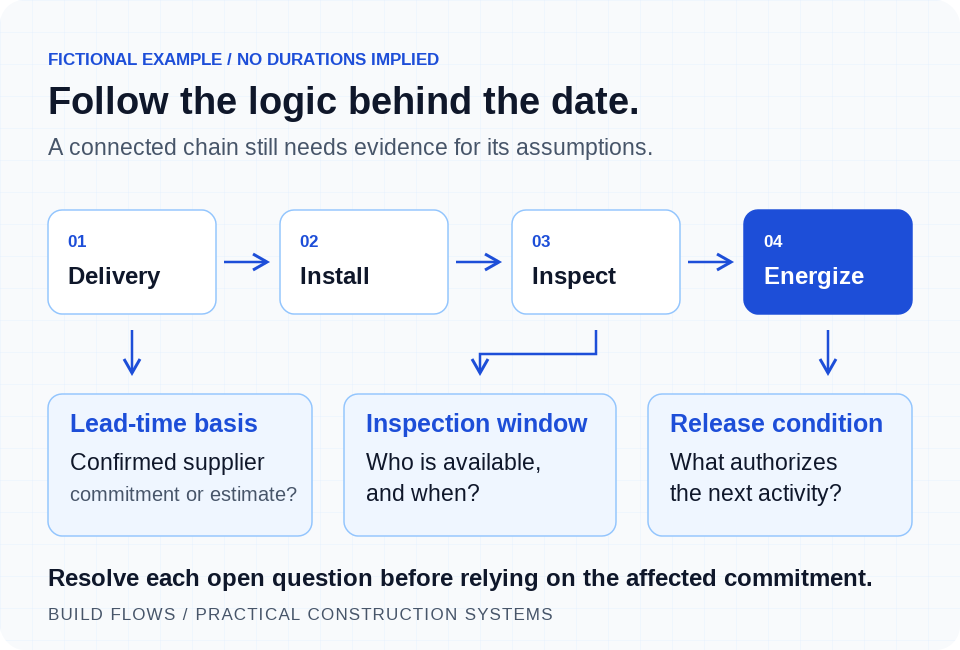
Start with the milestones people will make decisions from: access, procurement release, area turnover, substantial completion or another agreed commitment. Trace the driving chain backwards. For each important relationship, ask what physical or contractual dependency it represents.
A compact fictional example makes the distinction clear:
| Draft sequence | Review question | Disposition |
|---|---|---|
| Equipment delivery → installation | Is this the approved equipment lead time, or an unverified placeholder? | Ask the procurement owner for the basis |
| Installation → inspection | Is the inspection an explicit activity with an owner and a realistic availability window? | Add the missing reviewable step if required |
| Inspection → energization | What acceptance or permit condition authorizes energization? | Record the governing condition and accountable reviewer |
This example is a teaching scenario, not a schedule recommendation for a specific project. Durations, calendars, resources and local requirements must come from the job.
Oracle's P6 Check Schedule identifies potential issues such as missing relationships, lags, constraints, float and invalid progress dates. Its rules also have exclusions and configurable thresholds. Keep the check configuration with the results so reviewers know what was measured. A score from a different rule set is not a like-for-like comparison. Oracle P6 Professional Check Schedule documentation.
For calendar, data-date, constraint and critical-path settings, use the documentation for the receiving P6 version. Oracle's scheduling topics provide the relevant configuration references. Record the settings actually used; do not assume the sending application and the receiving application calculate in the same way.
Make every exception a decision
The useful output from a review is a small register of decisions, not a screenshot of a percentage.
| Field | Example entry — fictional |
|---|---|
| Draft revision | D03 |
| Activity or milestone | EQUIP-DELIVERY |
| Issue | Lead time has no confirmed supplier basis |
| Evidence | Draft source register, item S-07 |
| Owner | Procurement lead |
| Required action | Confirm basis or revise the delivery assumption |
| Release effect | Keep the affected milestone unapproved until resolved |
| Resolution | Leave blank until the reviewer records a decision |
A deliberate exception can be acceptable when its reason and consequences are understood. “Accepted” needs the reviewer, rationale and revision it applies to. If the draft changes in a way that affects that decision, reopen the relevant review item instead of silently carrying the old approval forward.
Download the AI schedule handover review register. It contains blank rows for the six package areas and a reusable issue row. It does not calculate a health score or approve the schedule.
Keep approval attached to the delivered revision
Before release, confirm that the reviewer saw the same draft now being exported. Preserve the approved artifact and its identity. If a repair changes a relationship, calendar, duration or milestone, the resulting revision needs the appropriate renewed review.
For an XER handover, distinguish three checks:
- File structure: can a reader parse the exported file consistently?
- Model comparison: do the exported activities, relationships and calendars match the reviewed model within the agreed scope?
- Receiving-system observation: what happened after the actual receiver imported and, where appropriate, recalculated it?
Passing the first two is not evidence that the third has happened. Document material differences and whether they arise from import choices, calculation settings or unsupported information. Our XER round-trip verification guide covers the engineering details; this handover checklist tells the recipient what evidence to request.
Use AI to shorten preparation, keep the decision visible
A good workflow can assemble files, draft questions, highlight exceptions and prepare a coherent review package. The value is reducing the effort required to reach a defensible decision while keeping the accountable person in view.
You can begin with the existing schedule health tool, then use this checklist in a real draft review. If your team repeatedly rebuilds the same review package by hand, that process may be a useful automation or custom application.
Talk with Charley about your scheduling workflow, or email charley@buildflows.ai. Bring the current handoff, the tools involved and the decision that takes too long. We can work out whether the right next step is a report, an integration, a focused application or an AI-assisted review process.
Frequently asked questions
What should accompany an AI-generated construction schedule?
A source register, confirmed planning decisions and open questions, schedule identity and settings, logic and health evidence, a change summary, and delivery evidence for the exact reviewed revision.
Does a high schedule health score mean the schedule is ready to accept?
A health score is only part of the evidence. Review its rules and thresholds, investigate exceptions, trace important milestone logic, and confirm the planning assumptions with the accountable people.
Does a verified XER file prove it will behave the same in P6?
No. File structure and model comparison are different from observing an actual import and recalculation in the receiving system. Record the receiver, settings, observed differences and the revision that was accepted.
Next step
Want help running this playbook?
Bring the report or workflow. We'll help map the work behind it.
Prefer email? charley@buildflows.ai
Keep learning

Scheduling & P6 · October 8, 2026
AI for CPM Scheduling and Primavera P6: What Works Today
A practical guide to where AI helps CPM schedulers today, from evidence-backed drafts and XER health checks to governed P6 access over MCP, and how to pilot it without risking a live schedule.
Scheduling & P6 · October 10, 2026
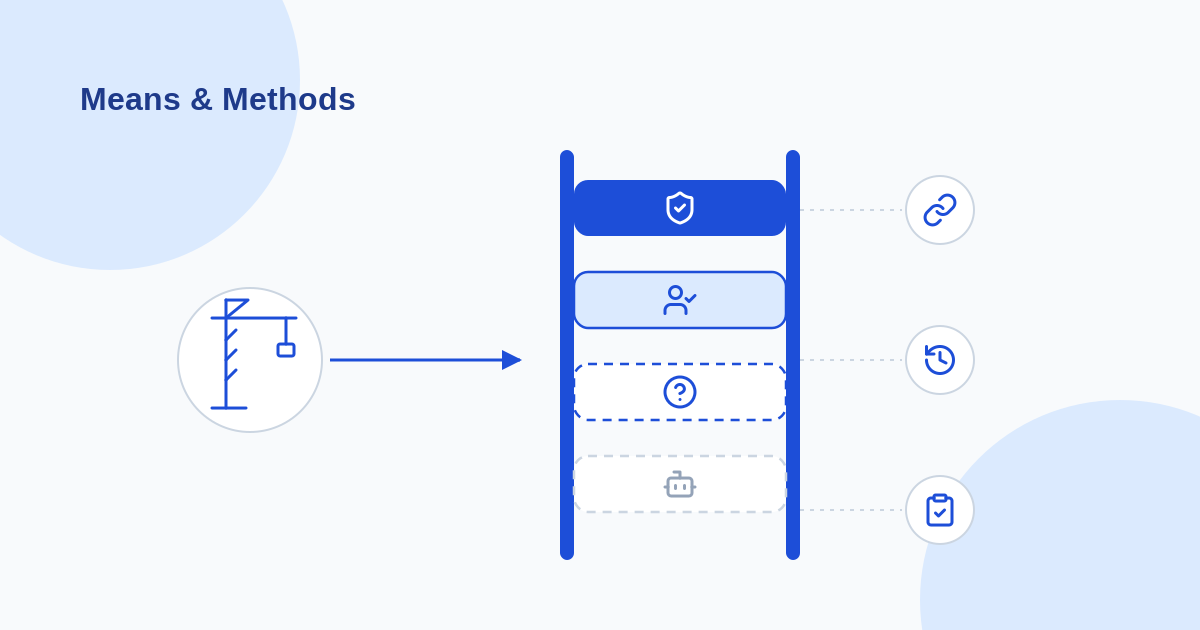
Means & Methods as a system of record: capturing expert reasoning as data, not chat
An engineering walkthrough of Connect's Means & Methods step: one artifact per project, a four-step confidence ladder, an append-only events log, hashed client share links, and a Schedule Builder that only reads reviewed answers.
Scheduling & P6 · October 10, 2026
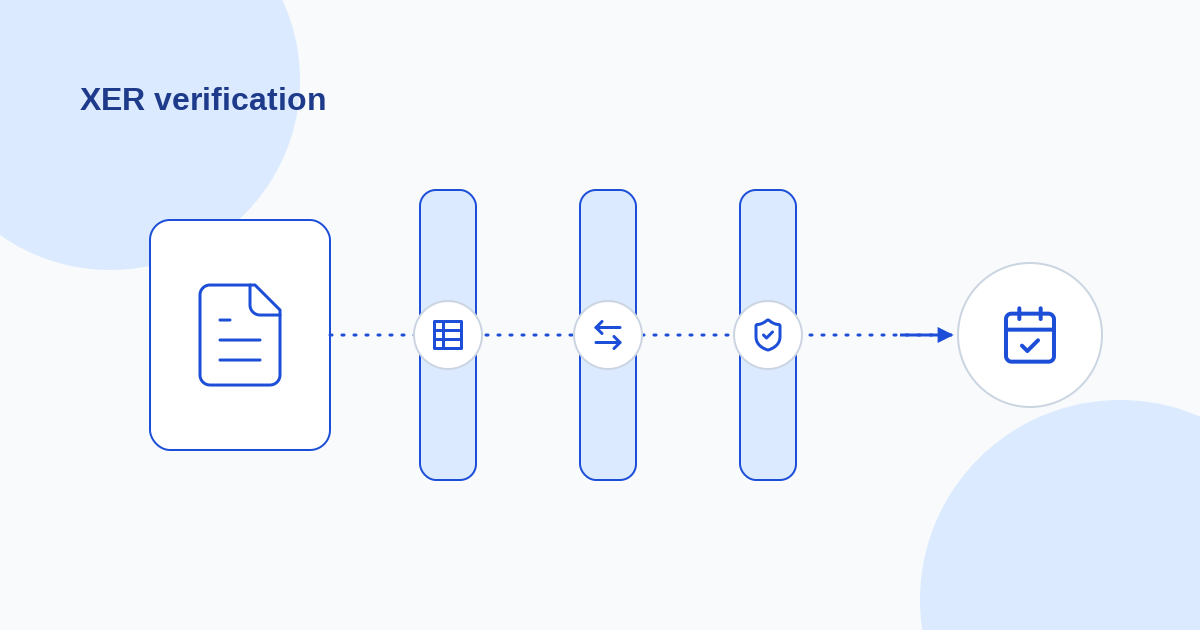
Verifying Primavera P6 XER Exports Before They Leave
How we write P6 19.12 .xer files and check them before a scheduler downloads them, and why local verification is kept separate from acceptance by the downstream importer.